Acquisition adds funding, engineering, and R&D resources to Aviotec's Turin operations, which continue under existing leadership
AMSTERDAM and TURIN, Italy, Sept. 1, 2026 /PRNewswire/ -- Canopy International B.V. ("Canopy International"), the European platform of Canopy Aerospace & Defense ("Canopy A&D"), today announced the acquisition of Aviotec S.r.l. ("Aviotec"), a Turin-based supplier of multi-layer insulation (MLI) blankets and electrical harnesses for satellites and spacecraft, with in-house design, analysis, manufacturing, and integration capabilities serving institutional and commercial space programs across Europe.
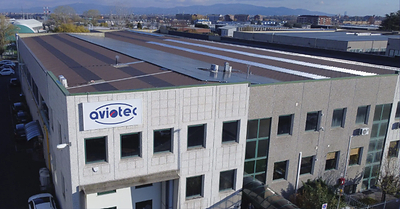
Canopy International is Canopy A&D's Amsterdam-based platform overseeing European operations and strategic growth. It is built to help European specialists grow, providing local leadership, customer interface, and design, development, and integration support, while giving each business access to shared engineering, R&D, and supply-chain resources. The acquisition adds funding, engineering knowledge, and manufacturing capacity to support Aviotec's continued growth, while its leadership, team, facility, design authority and customer relationships remain in place and managed locally.
Founded in 2008 and based in Turin, Aviotec has built more than 15 years of expertise in thermal-protection MLI blankets and high-reliability electrical harnesses, alongside satellite design and integration. Aviotec delivers flight-qualified solutions from design and analysis through manufacture, integration, and test, supporting institutional space programs and a growing base of commercial customers across Europe's space economy.
Raffaele Mozzillo, Managing Director of Canopy International, commented: "Aviotec has spent more than fifteen years earning the trust of Europe's space programs, and that track record is what brought us together. Their clean-room facility in Turin and their depth in thermal protection and harnessing strengthen our platform in exactly the area we needed. Aviotec now has the engineering, R&D, and supply-chain resources of a larger organization behind it."
Barbara Barresi, Amministratore Delegato of Aviotec, added: "Becoming part of Canopy International gives our team access to resources and technical depth we could not have built on our own. Our operations stay in Turin, under the same leadership, with the same people our customers already work with, now supported by a much larger platform. It is a natural next step for a company that has spent its history growing alongside Europe's space programs."
About Canopy International
Canopy International B.V., based in Amsterdam, is the European operating platform of Canopy Aerospace & Defense. It supports specialized aerospace and defense businesses in Europe by coordinating capital, technical resources, and operational capabilities while preserving local management and customer accountability. For customers and programs, its role is to provide continuity of local technical and commercial contact points while coordinating additional engineering, manufacturing, and supply-chain support when needed. Each portfolio company remains the primary interface for its customers, with Canopy International acting as a behind‑the‑scenes enabler.
About Aviotec
Aviotec, founded in 2008 and headquartered in Turin, Italy, designs and manufactures multi-layer insulation (MLI) blankets and electrical harnesses for satellites and spacecraft, and provides in-house satellite design and integration. Aviotec supports institutional space programs and a diversified base of commercial customers across the entire Space Economy.
About Canopy Aerospace & Defense
Canopy Aerospace & Defense is a leading provider of signal attenuating advanced materials for critical and complex structures in harsh & highly corrosive environments on air, land, sea, and space platforms. Combining world-class manufacturers, Canopy A&D is an international, vertically integrated platform with centers of excellence across advanced material R&D and design & engineering, production & assembly, and refurbishment & sustainment. With deep domain expertise and responsive manufacturing, Canopy A&D acts as a seamless "Built-In" extension of its partners, filling critical gaps across long manufacturing chains. European operations are independently managed through Canopy International B.V., based in Amsterdam, which partners with local European businesses, bringing support via shared engineering, R&D, and customer-support resources. The company operates facilities in Los Angeles, Denver, Cape Canaveral, the United Kingdom, and Italy.
Gaven Van Sant
Technical Marketing Lead
Canopy Aerospace & Defense
gaven.vansant@canopy-ad.com


 View original content to download multimedia:https://www.prnewswire.co.uk/news-releases/canopy-international-acquires-aviotec-strengthening-support-for-european-space-agencies-and-commercial-customers-302865706.html

Die Schweiz stimmt an diesem Wochenende über eine der umstrittensten Initiativen der vergangenen Jahre ab: „Keine 10-Millionen-Schweiz!“. Der Vorstoß der nationalkonservativen Schweizerischen Volkspartei (SVP), auch bekannt als Schweizerische Volkspartei oder Swiss People's Party, sieht vor, die ständige Wohnbevölkerung des Landes bis 2050 auf maximal zehn Millionen Menschen zu begrenzen. Nach ersten Hochrechnungen tendieren die Stimmbürgerinnen und Stimmbürger dazu, die Initiative abzulehnen – ein Ergebnis, das im Vorfeld keineswegs sicher schien.
Die Initiative, die in der Verfassung verankert werden soll, würde den Bund verpflichten, Gegenmaßnahmen zu ergreifen, sobald die Bevölkerung 9,5 Millionen erreicht. Die Schweiz zählte Ende 2025 bereits gut 9,1 Millionen Einwohner – rund 1,7 Millionen mehr als 2002. Haupttreiber des Wachstums ist die Zuwanderung. Rund 28% der im Land lebenden Menschen besitzen keinen Schweizer Pass. Viele stammen aus EU-Staaten wie Italien, Deutschland und Portugal, hinzu kommen Personen aus Drittstaaten, darunter Asylsuchende.
Unterstützer der Initiative argumentieren, das Land stoße an seine Belastungsgrenzen. Sie verweisen auf steigende Mieten, überlastete Verkehrswege, Staus sowie eine als problematisch wahrgenommene Entwicklung bei Gewalt und Kriminalität, die sie mit einer höheren Zuwanderung verknüpfen. Ziel sei es laut Kampagnenmotto, „zu bewahren, was wir lieben“. Die SVP wirbt mit auffälligen Aufklebern, Fahnen und Plakaten in Nationalfarben, um eine Begrenzung des Bevölkerungswachstums als Schutz der Lebensqualität zu präsentieren.
Gegen die Initiative stellen sich der Bundesrat, das Parlament, die Kantone sowie die meisten übrigen großen Parteien, gestützt von Wirtschaftsverbänden und Gewerkschaften. Sie warnen, ein starres Bevölkerungs- und damit faktisches Zuwanderungslimit könne den bereits bestehenden Arbeitskräftemangel verschärfen. Laut Bundesamt für Statistik waren im ersten Quartal 2026 rund 1,87 Millionen ausländische Erwerbstätige in der Schweiz beschäftigt. Etwa vier von fünf kamen aus EU- oder EFTA-Staaten oder dem Vereinigten Königreich, der Rest aus Drittstaaten. Viele arbeiten in Bereichen wie Gesundheitswesen, Bau und Gastgewerbe – Sektoren, die stark auf Personal aus dem Ausland angewiesen sind.
Ein weiterer Konfliktpunkt ist das Verhältnis zur Europäischen Union. Die Initiative sieht vor, dass die Schweiz in letzter Konsequenz das Abkommen über die Personenfreizügigkeit mit der EU kündigen müsste, sollte die Obergrenze sonst nicht zu halten sein. Gegner befürchten, dies könnte die bilateralen Beziehungen und den Zugang zum europäischen Arbeitsmarkt belasten. Befürworter halten dem entgegen, nur mit klaren quantitativen Vorgaben lasse sich der Druck auf Wohnungsmarkt, Infrastruktur und öffentliche Dienste nachhaltig begrenzen.
Parallel zur Abstimmung über die 10-Millionen-Grenze entscheiden die Stimmberechtigten auch über eine Verschärfung des Zivildienstgesetzes. Im Fokus der innenpolitischen Debatte steht jedoch vor allem die Frage, wie die Schweiz Wachstum, Wohlstand und gesellschaftlichen Zusammenhalt künftig austarieren will. Das Ergebnis der Volksabstimmung dürfte zwar die Initiative selbst klären, die Grundsatzdiskussion über Zuwanderung, Arbeitskräftebedarf und Lebensqualität in der Alpenrepublik jedoch kaum beenden.