Cision's new AI Visibility Dashboard integrates signals from leading AI platforms – including ChatGPT, Gemini, and Claude – into a unified media intelligence ecosystem.
CHICAGO, July 14, 2026 /PRNewswire/ -- Cision, a global leader in consumer and media intelligence, today announced the launch of AI Visibility Dashboard in its award-winning CisionOne platform, adding LLM monitoring to its comprehensive media intelligence offerings. Powered by data from Trajaan, the industry leader in search intelligence, the new feature enables public relations and communications teams to monitor, analyze, and benchmark how their brands appear across the world's leading AI platforms.
The new dashboard brings AI visibility data into CisionOne alongside media monitoring, social listening and media outreach, giving communications teams a more complete view of how brand reputation is being shaped across traditional and emerging channels.
As audiences increasingly turn to AI tools for research, product recommendations, and daily information, AI-generated responses are becoming an increasingly important part of how brands are discovered and perceived. For today's communications teams, this creates a new visibility challenge: It is no longer enough to understand what is being said in traditional media or social platforms. Teams also need to understand how AI-generated answers represent their brand and their competitors, which sources may be influencing those answers, and which prompts or topics are driving visibility.
"AI platforms are rapidly reshaping how the world consumes information and forms opinions about brands," said Jim Daxner, Chief Product Officer at Cision. "For modern PR and comms teams, understanding your brand's footprint in AI-generated answers is no longer optional. It's essential. By bringing AI visibility data into the same environment as media monitoring and social listening, we are giving professionals the first truly unified view of modern brand reputation."
Turning Disparate Signals Into Actionable Insights
The AI Visibility Dashboard enables users to monitor brand presence across all leading LLMs, including ChatGPT, Gemini, Claude, Perplexity, Grok, DeepSeek, Google AI Overview, Google AI Mode, and Mistral.
With the AI Visibility Dashboard, communications teams can:
Unlike standalone AI tracking tools that add another disconnected dashboard to the workflow, CisionOne integrates AI visibility metrics directly alongside traditional media monitoring, social listening, and media outreach in a single platform. This additional layer gives teams insights they can act on – helping them understand how media coverage, outreach activity, social conversations, and source authority may influence AI-generated responses, while giving them a more holistic way to report on brand visibility and communications impact.
"PR teams cannot protect or grow brand reputation in a vacuum; they need to see how their earned media efforts are actually feeding the algorithms consumers trust," said Amy Jones, Chief Marketing Officer at Cision. "Introducing search intelligence into the PR workflow isn't just about tracking another channel. It's about helping communicators connect the signals between media outreach, traditional coverage, and AI visibility so they can move from data to strategic action more quickly."
The launch reflects Cision's broader strategy to help communications and marketing teams move from disconnected data to connected intelligence. By making Trajaan-powered search intelligence available across the Cision product suite, including CisionOne, Brandwatch, and PR Newswire, Cision is helping teams connect the signals that shape reputation, audience understanding, discovery, and influence. For customers, that means a clearer view of how media coverage, social conversation, search behavior, distribution, and AI generated answers work together to shape brand perception.
The AI Visibility Dashboard is available today for CisionOne users. For more information or to request a demo, visit here.
About Cision
Cision is the global leader in consumer and media intelligence, engagement, and communication solutions. We equip PR and corporate communications, marketing, and social media professionals with the tools they need to excel in today's data driven world.
Our deep expertise, exclusive data partnerships, and award-winning products, including Trajaan, Brandwatch, CisionOne, and PR Newswire, bring together signals from search, social, and media so teams can better understand what's happening, shape the conversation, and amplify their impact.
Over 75,000 companies and organizations, including 84% of the Fortune 500, rely on Cision to make better decisions and achieve their goals.
For media inquiries, please contact: Cision Public Relations at CisionPR@cision.com

Photo - https://mma.prnewswire.com/media/3005548/CisionOne_AI_Visibility.jpg
Logo - https://mma.prnewswire.com/media/3005560/cisionlogo_Logo.jpg
 View original content:https://www.prnewswire.co.uk/news-releases/cision-adds-ai-search-visibility-to-cisionone-helping-pr-teams-track-how-brands-appear-in-ai-answers-302825246.html

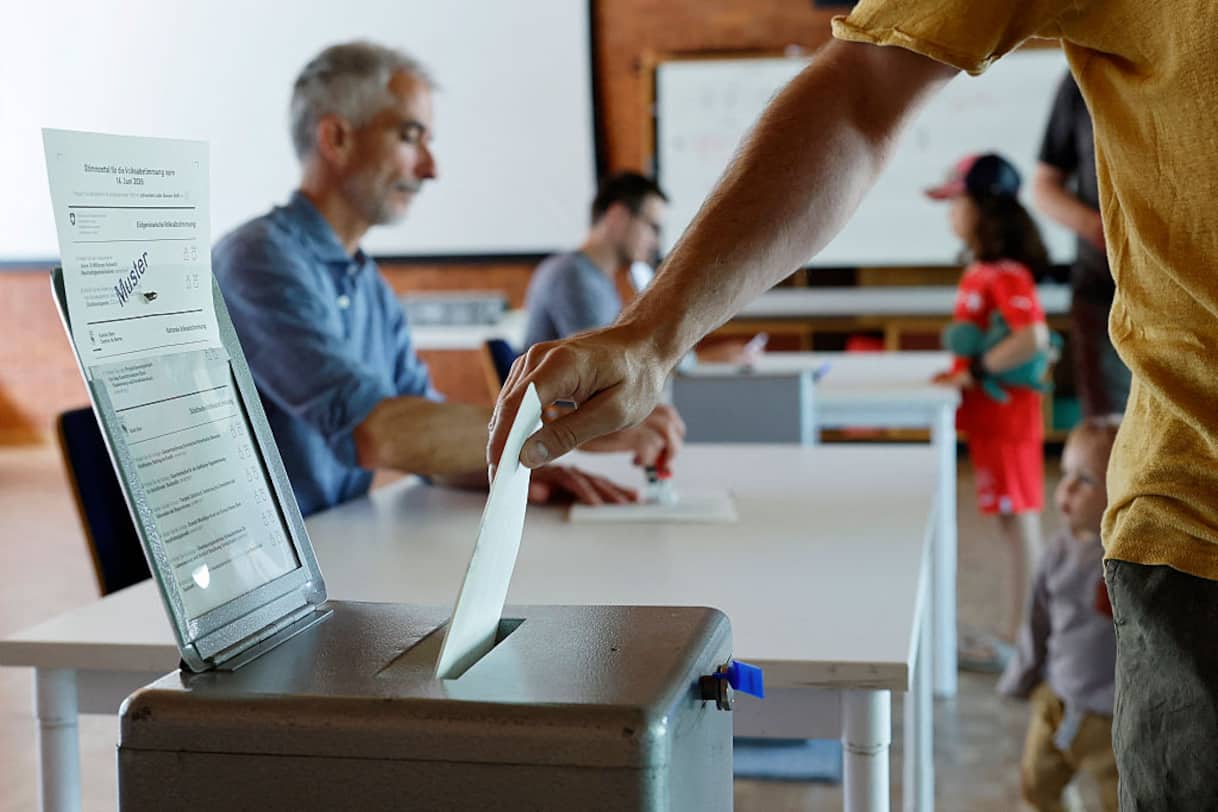
Die Schweizer Stimmberechtigten haben einer Verschärfung des Zivildienstgesetzes zugestimmt. Laut definitiven Ergebnissen votierten 52,5 Prozent für die Reform, rund 47,5 Prozent dagegen. Damit setzte sich der Kurs von Bundesrat und Parlament durch, den Zivildienst wieder klar als Ausnahme und nicht als gleichwertige Alternative zum obligatorischen Militärdienst zu definieren. Die Stimmbeteiligung lag mit rund 58 Prozent vergleichsweise hoch; 1'690'343 Personen legten ein Ja in die Urne, 1'531'878 stimmten Nein.
Das Ergebnis offenbart deutliche regionale Bruchlinien. Während viele deutschsprachige Kantone die Reform klar unterstützten – etwa Aargau mit 56,2 Prozent, St. Gallen mit 58,9 Prozent, Graubünden mit 59,3 Prozent und Luzern mit 56,9 Prozent Ja – fiel das Verdikt in der Romandie gespalten aus. Genf, Waadt, Neuenburg und Jura lehnten die Vorlage ab, mit Nein-Anteilen von bis zu gut 60 Prozent im Jura. Basel-Stadt stellte sich ebenfalls gegen die Verschärfung, und der Kanton Zürich kippte nach Auszählung der städtischen Stimmen knapp ins Nein-Lager. Demgegenüber sagten Wallis (57,1 Prozent), Freiburg (50,2 Prozent) und das Tessin (53,9 Prozent) Ja zur Reform.
Kern der Vorlage ist ein Paket von sechs Massnahmen, die den Wechsel aus der Armee in den Zivildienst deutlich unattraktiver machen sollen. Künftig müssen alle, die in den Zivildienst wechseln, mindestens 150 Diensttage leisten – unabhängig davon, wie viele Tage im Militär noch offen wären. Für Unteroffiziere und Offiziere gilt damit neu derselbe Umrechnungsfaktor von 1,5 Zivildiensttagen pro verbleibendem Militärdiensttag wie für einfache Soldaten. Wer alle Armee-Ausbildungstage bereits absolviert hat, kann künftig nicht mehr in den Zivildienst wechseln, um der Schiesspflicht zu entgehen.
Zusätzlich werden der zeitliche Rahmen und die Einsatzmöglichkeiten enger gezogen. Zivildienstleistende müssen ab dem Jahr nach ihrem ersten Einsatz jährlich Dienst leisten, bis alle vorgeschriebenen Tage erfüllt sind. Wer vor oder während der Rekrutenschule ein Gesuch stellt, muss den langen Anfangseinsatz von 180 Tagen bereits im Jahr nach der Zulassung absolvieren. Einsätze, die ein begonnenes Medizinstudium voraussetzen, werden gestrichen – offiziell, weil der Armee medizinisches Personal fehlt. Bürgerliche Parteien werteten das Ja als Bestätigung, dass der Zivildienst eine Ausnahme bleiben solle; die links-grüne Nein-Allianz verweist angesichts des knappen Resultats auf die breite gesellschaftliche Unterstützung für den Zivildienst und kündigt an, weitere Verschärfungen bekämpfen zu wollen.