Highlights
SYDNEY, Sept. 10, 2026 /PRNewswire/ -- First Graphene Limited (ASX: FGR, FRA: M11 and OTCQB: FGPHF) ("First Graphene" or "the Company") is pleased to announce its first production purchase order from Australian polyurethane manufacturer Pacific Urethanes Pty Ltd ("Pacific Urethanes") for PureGRAPH®.

The order represents a new commercial customer and new application for PureGRAPH®, with the material being incorporated into polyurethane formulations to enhance fire-retardant performance for applications targeting the Australian mining and resources sector.
The production order follows successful development work and represents the progression of the application into commercial manufacture.
First Graphene Managing Director and CEO, Michael Bell, said:
"Securing our first production order from Pacific Urethanes represents an important commercial milestone, introducing a new customer and a new application for PureGRAPH®.
PureGRAPH® provides an opportunity to enhance fire retardancy while retaining the properties that make polyurethane highly valuable to the mining industry.
The commercial opportunity is significant. The global urethane mining products market is estimated at approximately US$2.6 billion annually and forecast to approach US$3.8 billion by 2032.
Importantly, we're enhancing an established material extensively used across the mining industry and addressing a recognised performance requirement.
This provides a pathway for the technology to be applied across a broad range of polyurethane mining applications and exemplifies our strategy of converting PureGRAPH® into commercial applications with potential to generate ongoing demand.
We're delighted to be working with Pacific Urethanes and look forward to supporting the commercial rollout of PureGRAPH®-enhanced polyurethane to the Australian mining industry."
PureGRAPH® enhanced polyurethane for mining
Pacific Urethanes is an Australian-owned manufacturer and developer of high-performance polyurethane systems servicing mining, resources, infrastructure and other industrial markets.
Polyurethane is used extensively throughout mining and mineral processing because of its combination of abrasion resistance, toughness, flexibility and impact performance.
Applications include screening media, wear liners, slurry systems, conveyor components, pumps and piping, chute and hopper liners, seals and protective coatings.
While these properties make polyurethane particularly valuable in harsh mining environments, fire performance can be a limitation, particularly in underground applications where fire, smoke and potentially hazardous gases present heightened safety risks.
PureGRAPH® is being incorporated into Pacific Urethanes' polyurethane formulations to enhance this important performance characteristic.
Graphene's highly planar structure can provide a barrier effect within the polymer matrix, restricting heat and decomposition-product transfer and supporting the formation of a more protective char layer during exposure to fire.
Published research into graphene-enhanced polyurethane systems has demonstrated improvements in measures including heat release, thermal degradation and smoke generation.
This provides an opportunity to enhance polyurethane's fire-retardant performance while maintaining the wear and mechanical characteristics that have driven its widespread adoption throughout the mining industry.
Significant global mining market
The global urethane mining products market is estimated at approximately US$2.6 billion annually and forecast to reach approximately US$3.8 billion by 20321.
The market encompasses polyurethane and urethane products used across mineral screening, slurry handling, pumps and piping, transfer points, liners and other high-wear mining applications.
Pacific Urethanes' initial focus is the Australian mining sector; however, the requirement for materials combining wear resistance, durability and enhanced fire performance extends globally.
For First Graphene, the production order creates a commercial pathway into an established materials market by enhancing a product already extensively used throughout mining, rather than requiring customers to adopt an entirely new material system.
It also expands PureGRAPH® into a new commercial performance application – fire-retardancy enhancement – with potential relevance to other polyurethane applications where improved fire performance is required.
-Ends-
This announcement has been approved by the Chairman.
 View original content to download multimedia:https://www.prnewswire.co.uk/news-releases/fgr-secures-pacific-urethanes-production-order-for-mining-fire-retardant-application-302873353.html

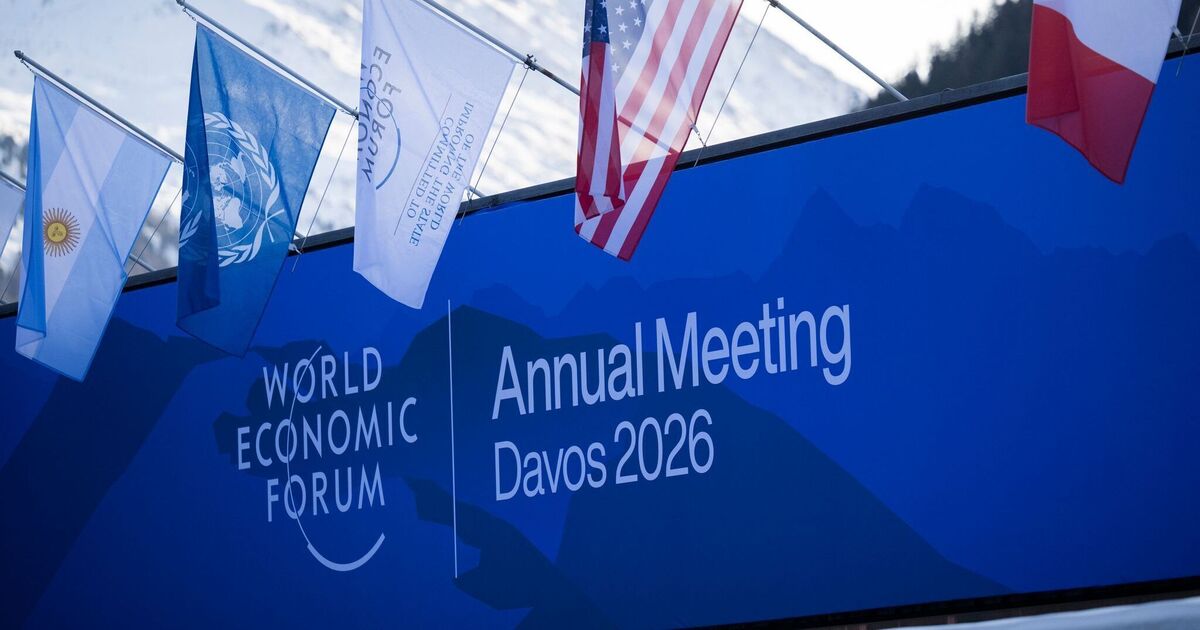
Eine anonyme E-Mail an die US-Botschaft in Bern hat kurz vor dem Auftritt von US-Präsident Donald Trump beim Weltwirtschaftsforum in Davos ein Ermittlungsverfahren der Schweizer Bundesanwaltschaft ausgelöst – und zur Festnahme einer WEF-Mitarbeiterin geführt. Inzwischen ist klar: Die gegen die IT-Expertin erhobenen Vorwürfe eines geplanten Attentats waren nicht zu belegen. Die Bundesanwaltschaft teilte mit, die in der Sache eröffneten Ermittlungen wegen strafbarer Vorbereitungshandlungen zu einem Mord seien eingestellt worden.
Die Warnmail war laut Medienberichten der Tamedia-Gruppe wenige Stunden vor Trumps Rede eingegangen. Der anonyme Absender schilderte in fehlerhaftem Englisch eine angeblich „dringliche Bedrohung“ für das Leben des US-Präsidenten in Davos und bezeichnete die später festgenommene Frau iranischer Herkunft als Agentin, die eine entsprechende Operation koordiniert habe. Die US-Botschaft leitete den Hinweis an die Schweizer Behörden weiter; diese erklärten, sie hätten die Warnung „sehr ernst“ genommen und seien „sofort aktiv“ geworden.
Tatsächlich arbeitete die Beschuldigte nicht am Tagungsort in Davos, sondern in der WEF-Zentrale im Genfer Vorort Cologny. Dort wurde sie nach Angaben der Bundesanwaltschaft festgenommen, mehrere Stunden lang bis tief in die Nacht vernommen und ihre Telefone sowie ihr Computer wurden beschlagnahmt und ausgewertet. Im Zuge dieser Maßnahmen habe sich jedoch gezeigt, dass sich keiner der in der anonymen E-Mail erhobenen Punkte erhärten ließ. Für alle Aspekte der Anschuldigungen seien keine Beweise gefunden worden, hieß es zur Begründung für die Einstellung des Verfahrens.
Die betroffene Mitarbeiterin, eine gebürtige Iranerin, war nach den Medienberichten kurz nach dem Vorfall beim WEF nicht mehr beschäftigt. Zu den Gründen äußerte sich die Organisation nicht; auf entsprechende Anfragen gab es zunächst keine Stellungnahme. Damit bleiben nach dem spektakulären Fehlalarm vorerst Fragen offen – etwa zur Herkunft und Glaubwürdigkeit des anonymen Hinweises –, während die Schweizer Strafverfolger den Fall strafrechtlich abgeschlossen haben.