Collaboration will bring together complementary power generation and grid technologies to deliver reliable, flexible and scalable power infrastructure as electricity demand surges globally
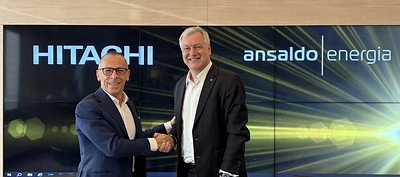
ZÜRICH, Oct. 16, 2026 /PRNewswire/ -- Hitachi Energy and Ansaldo Energia today signed a Memorandum of Understanding to develop and market integrated power solutions designed to help customers secure reliable power faster and meet rapidly growing electricity needs with greater flexibility, resilience and speed.
The collaboration aims to bring together complementary capabilities in power generation and power grid infrastructure, combining Ansaldo Energia's gas-turbine and generator technologies with Hitachi Energy's leadership in full grid system integration spanning high-voltage, transformers, automation and power electronics.
Together, the companies intend to develop integrated power generation and electrification solutions capable of serving both 60 Hz and 50 Hz markets, including deployment in data centers.
The collaboration comes as global electricity demand is expected to nearly double by 2050 as electrification accelerates across digital infrastructure, industry, and transportation. The challenge is particularly acute in the United States, where the rapid expansion of AI and data centers is driving unprecedented demand for power and creating an urgent need for reliable, large-scale energy infrastructure that can be deployed faster.
"Power demand is growing at a pace we have not seen for decades as the world enters the electricity era," said Andreas Schierenbeck, CEO of Hitachi Energy. "As power demand continues to outpace available infrastructure, the need for scalable, rapidly deployable power solutions has become increasingly urgent. By combining our complementary strengths with Ansaldo Energia, we help customers unlock new capacity, accelerate time to power, and build resilient energy systems that support economic growth and digital innovation."
"Meeting the world's growing demand for electricity requires closer collaboration across the entire energy value chain," said Fabrizio Fabbri, CEO of Ansaldo Energia. "By combining Ansaldo Energia's power generation technologies with Hitachi Energy's expertise in grid infrastructure, we will provide integrated solutions that accelerate deployment and deliver the scale, flexibility and reliability required by the next generation of industrial, digital and energy infrastructure."
Through this collaboration, both companies intend to develop an end-to-end solution for various applications, integrating power generation with the complete power transmission system through to the point of consumption, including energy hubs, data centers and other large-scale electricity consumers. Hitachi Energy also aims to support the autonomous and integrated operation of data centers through One Hitachi by combining its end-to-end power solutions with HMAX Data Center.
Trademark Notice: All trademarks and product names are the property of their respective owners.
About Hitachi Energy
Hitachi Energy is a global leader in electrification, powering the electricity era to meet the energy demands of today, and the next 25 years. As the energy arm of Hitachi Group, over three billion people depend on our pioneering, mission-critical technologies to power their daily lives. With over a century of innovation, we are addressing the most urgent energy challenge of our time: driving the evolution of the world's energy system to ensure abundant, secure, affordable, and sustainable power for today's generation and the next. With an unparalleled installed base in over 140 countries, we are the grid ecosystem partner across the utility, industry, data center, and transportation sectors. Headquartered in Switzerland, we employ over 56,000 people in 60 countries and generate revenues of around $20 billion USD.
Https://www.hitachienergy.com
https://www.linkedin.com/company/hitachienergy
https://x.com/HitachiEnergy
About Hitachi, Ltd.
Through its Social Innovation Business (SIB) that brings together IT, OT (Operational Technology) and products, Hitachi aims to be a global leader in continuously transforming social infrastructure through digital, contributing to a harmonized society where the environment, wellbeing, and economic growth are in balance. Hitachi operates worldwide across four sectors – Digital Systems & Services, Energy, Mobility, and Connective Industries – as well as a Strategic SIB Business Unit focused on new growth areas. With Lumada at its core, Hitachi creates value by combining data, technology and domain knowledge to solve customer and social challenges. Revenues for FY2025 (ended March 31, 2026) totaled 10,586.7 billion yen, with 606 consolidated subsidiaries and approximately 290,000 employees worldwide. Visit us at https://www.hitachi.com
About Ansaldo Energia
Ansaldo Energia is a global player in the power generation industry and a key player in energy security and transition. Controlled by CDP Equity, part of Italy's Cassa Depositi e Prestiti Group, Ansaldo Energia is headquartered in Genoa, employs more than 3,500 people and operates through over 30 offices worldwide. The Group designs and manufactures gas and steam turbines and generators for large-scale power plants, while providing upgrades, maintenance and digital services across the entire lifecycle of power generation assets. Its technologies are installed in around 1,000 power plants across 100 countries worldwide. Building on more than 170 years of industrial and technological expertise, Ansaldo Energia supports the transition towards a lower-carbon energy system through advanced, flexible and efficient generation technologies. The Group is also active in the nuclear sector and in the development of technologies for energy transition, including hydrogen production.
https://www.ansaldoenergia.com

 View original content to download multimedia:https://www.prnewswire.co.uk/news-releases/hitachi-energy-and-ansaldo-energia-launch-a-strategic-partnership-to-bring-integrated-power-solutions-to-meet-surging-electricity-demand-302911090.html

Während die Dieselpreise in Teilen Italiens neue Höchststände erreichen, zeichnet sich in Luxemburg eine spürbare Entspannung ab – und in Deutschland profitieren Autofahrer nur eingeschränkt von Steuererleichterungen. In Südtirol kletterte der Dieselhöchstpreis in Bozen Medienberichten zufolge auf 2,288 Euro pro Liter und lag damit am Mittwoch über dem Durchschnitt auf den italienischen Autobahnen. Dort wurden im Schnitt 2,287 Euro pro Liter Diesel fällig. Im gesamtstaatlichen Vergleich ist Südtirol damit weiterhin Spitzenreiter bei den Preisen.
Auch in anderen italienischen Regionen zogen die Dieselpreise deutlich an. In Trient stieg der Selbstbedienungspreis auf 2,274 Euro pro Liter, ein Anstieg um 1,1 Cent binnen eines Tages. Die stärksten Preissprünge wurden jedoch nicht in den teuersten Regionen verzeichnet, sondern im Nordosten und im Westen des Landes: In Friaul verteuerte sich ein einmaliges Volltanken von 50 Litern Diesel um 1,25 Euro, in Ligurien um 1,20 Euro, im Latium um 1,15 Euro. Auf den Autobahnen wurden Tagesanstiege von bis zu zwei Cent je Liter registriert. Der Präsident der nationalen Verbraucherunion, Massimiliano Dona, wirft der Regierung in Rom vor, zu wenig gegen die Preisanstiege zu unternehmen, und warnt vor möglichen Folgen für die Inflation.
Parallel dazu zeigt sich in Luxemburg ein gegenteiliger Trend. Dort wird Diesel nach Angaben des Wirtschaftsministeriums ab Mitternacht um 6,2 Cent je Liter günstiger und kostet dann 1,995 Euro. Damit fällt der Preis unter die Marke von zwei Euro. Die Benzinsorten Super 95 und Super 98 bleiben stabil bei 1,837 Euro beziehungsweise 2,049 Euro je Liter. Auch Heizöl wird in Luxemburg billiger: Bei Abnahme von mindestens 1.500 Litern sinkt der Literpreis am Mittwoch ebenfalls um 6,2 Cent auf 1,477 Euro. Der Großherzogtum bewegt sich damit preislich klar unter dem Niveau vieler Regionen in Italien.
In Deutschland wiederum kommt eine bereits beschlossene Steuerentlastung für Autofahrer nur begrenzt an. In Sachsen-Anhalt senkte die Bundesregierung vor rund einer Woche die Steuern auf Kraftstoffe um 17 Cent pro Liter. Laut dem Portal Benzinpreis-blitz kostete Super E10 am Mittwochnachmittag im Landesdurchschnitt 2,12 Euro pro Liter und damit lediglich rund sieben Cent weniger als am Nachmittag vor Inkrafttreten des Rabatts. Der Dieselpreis lag bei 2,19 Euro pro Liter, rund 15 Cent unter dem Vorkrisenniveau. Die Entlastung erreicht damit nicht vollständig die angekündigte Höhe, zudem spielt laut den Erhebungen die Uhrzeit eine wesentliche Rolle: Je nach Tageszeit fällt der Vorteil für Verbraucher unterschiedlich aus.
Im europäischen Vergleich entstehen damit deutliche Preisunterschiede für Dieselverbraucher. Während Italien mit Rekordständen in Teilen des Landes und spürbaren Tagesanstiegen im Fokus steht, nutzt Luxemburg den Spielraum für Preissenkungen. Deutschland versucht, über Steuersenkungen gegenzusteuern, bislang mit begrenzter Durchschlagskraft an der Zapfsäule. Für Verbraucher bleibt das Umfeld volatil – und die Frage, in welchem Umfang staatliche Eingriffe und Marktbewegungen künftig tatsächlich im Portemonnaie der Autofahrer ankommen.