SEOUL, South Korea, Sept. 13, 2026 /PRNewswire/ -- Hyundai Motor Group (the Group) announced that it has put its Data Flywheel into full operation, marking a new phase in its autonomous driving technology strategy. The system creates a virtuous cycle of data collection, AI training, validation and deployment to secure a competitive advantage through accelerated learning and technology development.
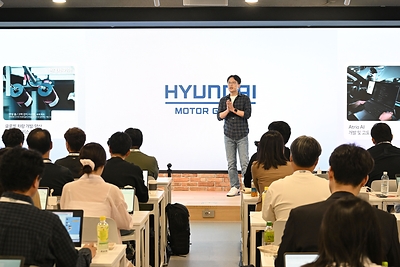
During the Group's "HMG Autonomous Driving Media Day" at 42dot headquarters in Gyeonggi Province, Korea, the Group presented its autonomous driving development strategy, technology roadmap, key achievements and implementation plans. The presentation underscored the Group's strategic positioning in the global autonomous driving technology competition and detailed how integrated data and AI systems form the foundation for next-generation vehicle technology.
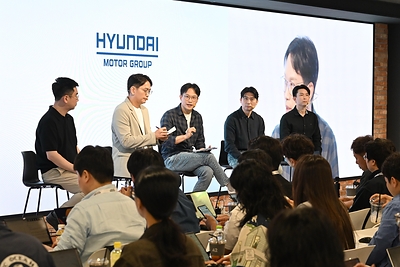
At the event, the Group identified the Data Flywheel as a key element of its autonomous driving competitiveness and shared the operational framework and execution strategy that transforms large-scale real-world driving data into continuous technology improvements.
42dot also introduced key technologies and the development progress for the Group's proprietary autonomous driving artificial intelligence, Atria AI, while outlining the background and future plans for its Vision-Language-Action (VLA) technology development initiative.
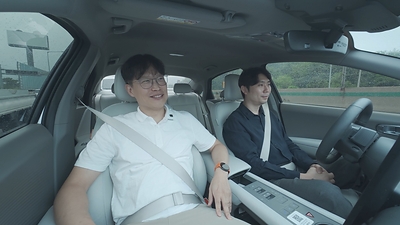
In line with the event, the Group unveiled footage of an Atria AI-equipped SDV Testbed navigating complex urban traffic without driver intervention. Operating at a Level 2++ capability, the autonomous driving system showcased in the footage illustrates how the Data Flywheel is enabling a continuous cycle of learning, validation and performance improvement. The footage is available on the Group's official YouTube channel.
"Autonomous driving competition is no longer about comparing specific features. Competitiveness is determined by how much data you secure, how quickly you learn and how effectively you can reflect those results in actual products and services. At its core, autonomous driving competitiveness comes down to having systems that enable continuous, rapid learning. Hyundai Motor Group will develop autonomous driving technology that customers can trust, based on a virtuous cycle of data, AI and validation. Our goal is to ensure the safety and quality levels customers can trust while we learn and improve rapidly." – Minwoo Park, President and Head of Advanced Vehicle Platform (AVP) Division at Hyundai Motor Group and CEO of 42dot
About Hyundai Motor Group
More information about Hyundai Motor Group can be found at: http://www.hyundaimotorgroup.com or Newsroom: Media Hub by Hyundai, Kia Global Newsroom, Genesis Newsroom
 View original content to download multimedia:https://www.prnewswire.co.uk/news-releases/hyundai-motor-group-accelerates-autonomous-driving-innovation-with-ai-powered-data-flywheel-302876372.html

Während die Dieselpreise in Teilen Italiens neue Höchststände erreichen, zeichnet sich in Luxemburg eine spürbare Entspannung ab – und in Deutschland profitieren Autofahrer nur eingeschränkt von Steuererleichterungen. In Südtirol kletterte der Dieselhöchstpreis in Bozen Medienberichten zufolge auf 2,288 Euro pro Liter und lag damit am Mittwoch über dem Durchschnitt auf den italienischen Autobahnen. Dort wurden im Schnitt 2,287 Euro pro Liter Diesel fällig. Im gesamtstaatlichen Vergleich ist Südtirol damit weiterhin Spitzenreiter bei den Preisen.
Auch in anderen italienischen Regionen zogen die Dieselpreise deutlich an. In Trient stieg der Selbstbedienungspreis auf 2,274 Euro pro Liter, ein Anstieg um 1,1 Cent binnen eines Tages. Die stärksten Preissprünge wurden jedoch nicht in den teuersten Regionen verzeichnet, sondern im Nordosten und im Westen des Landes: In Friaul verteuerte sich ein einmaliges Volltanken von 50 Litern Diesel um 1,25 Euro, in Ligurien um 1,20 Euro, im Latium um 1,15 Euro. Auf den Autobahnen wurden Tagesanstiege von bis zu zwei Cent je Liter registriert. Der Präsident der nationalen Verbraucherunion, Massimiliano Dona, wirft der Regierung in Rom vor, zu wenig gegen die Preisanstiege zu unternehmen, und warnt vor möglichen Folgen für die Inflation.
Parallel dazu zeigt sich in Luxemburg ein gegenteiliger Trend. Dort wird Diesel nach Angaben des Wirtschaftsministeriums ab Mitternacht um 6,2 Cent je Liter günstiger und kostet dann 1,995 Euro. Damit fällt der Preis unter die Marke von zwei Euro. Die Benzinsorten Super 95 und Super 98 bleiben stabil bei 1,837 Euro beziehungsweise 2,049 Euro je Liter. Auch Heizöl wird in Luxemburg billiger: Bei Abnahme von mindestens 1.500 Litern sinkt der Literpreis am Mittwoch ebenfalls um 6,2 Cent auf 1,477 Euro. Der Großherzogtum bewegt sich damit preislich klar unter dem Niveau vieler Regionen in Italien.
In Deutschland wiederum kommt eine bereits beschlossene Steuerentlastung für Autofahrer nur begrenzt an. In Sachsen-Anhalt senkte die Bundesregierung vor rund einer Woche die Steuern auf Kraftstoffe um 17 Cent pro Liter. Laut dem Portal Benzinpreis-blitz kostete Super E10 am Mittwochnachmittag im Landesdurchschnitt 2,12 Euro pro Liter und damit lediglich rund sieben Cent weniger als am Nachmittag vor Inkrafttreten des Rabatts. Der Dieselpreis lag bei 2,19 Euro pro Liter, rund 15 Cent unter dem Vorkrisenniveau. Die Entlastung erreicht damit nicht vollständig die angekündigte Höhe, zudem spielt laut den Erhebungen die Uhrzeit eine wesentliche Rolle: Je nach Tageszeit fällt der Vorteil für Verbraucher unterschiedlich aus.
Im europäischen Vergleich entstehen damit deutliche Preisunterschiede für Dieselverbraucher. Während Italien mit Rekordständen in Teilen des Landes und spürbaren Tagesanstiegen im Fokus steht, nutzt Luxemburg den Spielraum für Preissenkungen. Deutschland versucht, über Steuersenkungen gegenzusteuern, bislang mit begrenzter Durchschlagskraft an der Zapfsäule. Für Verbraucher bleibt das Umfeld volatil – und die Frage, in welchem Umfang staatliche Eingriffe und Marktbewegungen künftig tatsächlich im Portemonnaie der Autofahrer ankommen.