HANNOVER, Germany, Sept. 14, 2026 /PRNewswire/ -- Kia Corporation (Kia) today unveiled the Kia PV7 at IAA Transportation 2026 in Hannover, Germany. The second model in Kia's dedicated, all-electric Platform Beyond Vehicle (PBV) lineup, the PV7 expands the brand's offering in the light commercial vehicle (LCV) segment.
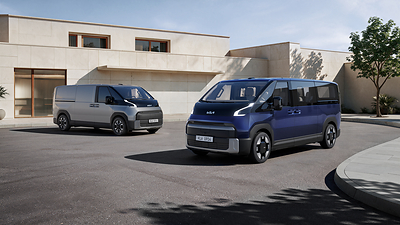
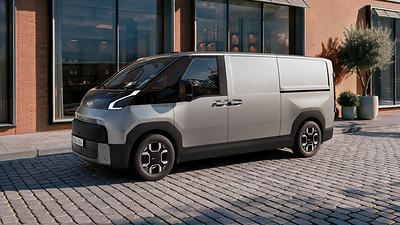
Available in Cargo and Passenger variants, the PV7 combines electric performance, flexible interior space and connected technology to support a wide range of business and mobility applications. Built on Kia's PBV-dedicated E-GMP.S architecture, it features a flat-floor design that maximizes interior space and flexibility, along with productivity-focused solutions that help customers achieve greater productivity in their day-to-day operations and drive stronger business outcomes. Kia will launch the PV7 in Korea and Europe in 2027, with additional derivatives and markets to follow.
"The PV7 marks the next step in our journey toward personalized mobility, building on the foundation established by the PV5," said Ho Sung Song, President and CEO at Kia. "By bringing together hardware developed for specific applications, business-tailored software and dedicated PBV services, the PV7 goes beyond the vehicle itself to deliver a complete business solution that helps customers achieve greater productivity, flexibility and long-term value."
How does the PV7 advance Kia's PBV strategy?
Building on the foundation established by the PV5, named the 2026 International Van of the Year, the PV7 expands the scale and scope of Kia's PBV offering. Its larger dimensions and broader application potential enable Kia to serve a wider range of customer needs, from fleet, logistics and shuttle operations to small- and medium-sized businesses and personal mobility. Kia's PV7 strategy is built around three business-focused pillars: hardware, software and service.
At the hardware level, the PV7 is built on Kia's PBV-dedicated E-GMP.S architecture, leveraging Kia's proven EV expertise and Flexible Body System[1] to support a wide range of body styles, derivatives and conversion models tailored to diverse operational needs. This comprehensive lineup enables the PV7 to serve as a business-tailored tool, providing customers with the flexibility to adapt the vehicle to their specific operational requirements.
At the software level, Kia provides the Kia Business Solutions Portal, which supports fleet management, charging, maintenance and daily operations. Standardized Fleet Management System (FMS) and connected vehicle data APIs tailored to customers' operational needs help improve fleet visibility and support more efficient day-to-day operations.
In addition, Kia offers dedicated Uptime services that support vehicle availability through real-time monitoring, predictive diagnostics and proactive maintenance management. Together, these connected solutions are designed to reduce operational disruption and support Kia's commitment to service excellence.
Kia's business-tailored service is centered on PBV-dedicated services designed to provide tailored support across diverse business operations, lower total cost of ownership and support higher vehicle uptime. Kia plans to expand the PV7 lineup to 23 variants following its 2027 launch, with the PV9 set to follow in 2029, further broadening the brand's PBV lineup and mobility solutions.
"The PV7 has been developed to give customers the flexibility to adapt as needs evolve," said Sangdae Kim, Executive Vice President and Head of Kia's PBV Business Division. "As a business-tailored tool engineered to deliver best-in-class EV performance, data-driven solutions, and total service excellence, it will enable customers to improve work efficiency, enhance productivity, and create greater value throughout the business lifecycle."
-ENDS-
Visit Kia Global Newsroom for more Kia content
For more information, visit the Kia Global Brand Site or Kia Global Newsroom. Follow our Kia Global Newsroom Instagram channel @kia.globalnews and LinkedIn account @Kia Global News
[1] Flexible Body System (FBS) is Kia's next-generation modular body architecture that enables the flexible development of diverse body styles and derivatives from a standardized vehicle structure. |

 View original content to download multimedia:https://www.prnewswire.co.uk/news-releases/kia-pv7-expands-all-electric-pbv-lineup-with-greater-capacity-and-flexibility-302877451.html

Inflationssorgen und steigende Ölpreise haben Europas wichtigste Aktienmärkte zur Wochenmitte spürbar belastet und zugleich die Monatsbilanz eingetrübt. Der EuroStoxx 50 schloss am Mittwoch 0,81 Prozent tiefer bei 6269,02 Punkten. Im Monatsverlauf verlor der Leitindex der Eurozone 2,4 Prozent und beendete damit eine Serie von fünf Anstiegen in Folge. Der DAX gab um 0,79 Prozent auf 25.199,19 Punkte nach, während der britische FTSE moderat um rund ein Viertel Prozent auf gut 10.600 Zähler nachgab.
Treiber der Risikoaversion waren neue Inflationsdaten aus großen Euroländern. In Deutschland kletterten die Verbraucherpreise im September auf 3,3 Prozent gegenüber dem Vorjahr und damit erstmals seit Ende 2023 wieder über die Marke von drei Prozent, nachdem im August noch 2,9 Prozent verzeichnet worden waren. Starke Anstiege der Energiepreise wirkten als Hauptfaktor – eine Entwicklung, die sich nach ersten Angaben auch in Frankreich und Italien widerspiegelt. In Italien kam es zudem zu einem deutlichen Anstieg der Teuerung, was die Sorge nährte, dass der disinflationäre Trend im Euroraum ins Stocken geraten könnte.
Parallel dazu zogen die Ölpreise erneut an. Marktteilnehmer verwiesen auf die angespannte geopolitische Lage im Nahen Osten und mögliche Risiken für die Öllieferungen aus dem Persischen Golf. Berichte, wonach mehrere Tankschiffe in der Straße von Hormuz unter Beschuss geraten sein sollen, verstärkten die Nervosität. Höhere Energiekosten und im Umfeld der Inflationsdaten steigende Anleiherenditen machten Anleger nach Einschätzung von Marktstrategen europaweit selektiver. Ulrich Urbahn, Leiter Multi-Asset-Strategie und Research bei Berenberg, sieht dennoch Chancen für eine Jahresendrallye: Robuste Unternehmensgewinne könnten die Märkte stützen, sofern Firmen ihre Margen und Prognosen behaupten und sowohl Inflation als auch Renditen nicht weiter zulegen.
Im Branchenspektrum fehlten klare Impulse von den Technologiewerten, die nach Vortagesgewinnen überwiegend richtungslos tendierten. Viele Investoren warteten auf die anstehenden Quartalszahlen des US-Speicherchip-Herstellers Micron, die als Gradmesser gelten, ob der Boom rund um Künstliche Intelligenz weiterhin ausreichend im operativen Geschäft der Halbleiterbranche ankommt. Analyst Andreas Lipkow von CMC Markets warnte, eine Enttäuschung bei Micron könne die zuletzt gewachsene Skepsis gegenüber dem KI-Sektor rasch in neuen Verkaufsdruck umschlagen lassen. Einzelwerte wie BMW im DAX konnten sich diesem Umfeld zwar mit Kursgewinnen entziehen, insgesamt dominierte an den europäischen Börsen jedoch zum Monatsende die Vorsicht.