Smart data capture solution, powered by vision AI, self-verifies consumers in under 10 seconds with data privacy assured enabling retailers to optimize labor and ensure compliance
ZURICH, July 8, 2026 /PRNewswire/ -- Scandit, the leader in smart data capture, today announced Age Verified Self-Checkout, a new solution that enables retailers to automate and verify self-checkout purchases of age-restricted items to reduce lane delays, remove avoidable associate intervention and improve compliance.
Built for retailers selling products such as alcohol, tobacco and medication, Age Verified Self-Checkout delivers a fully autonomous checkout with no additional kiosk hardware needed. It addresses one of the biggest sources of friction in self-checkout: the need for store associates to manually intervene on the 9 billion age-restricted, self-checkout transactions globally each year*. With this solution, 80% of age checks are resolved automatically in seconds - removing the need for associate intervention, while the verification process is 6x faster for the customer. The streamlined checks result in 5% more transactions across a retailer's full self-checkout fleet leading to shorter queues and increased sales - especially during peak hours.
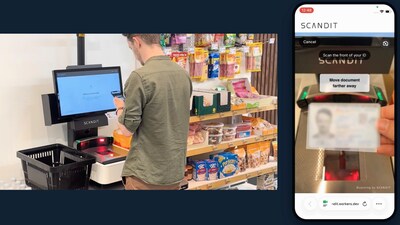
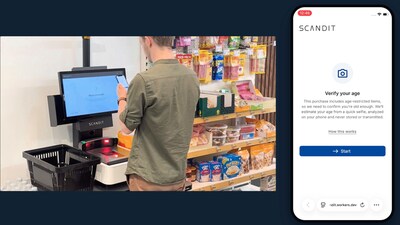
By turning a customer's smartphone into a private, secure, instant age-check tool, the solution allows shoppers to verify their age in under 10 seconds with no app download required primarily via face estimation technology or scanning their ID as an alternative.
In addition to helping retailers avoid the cost and maintenance burden of hardware-based alternatives, it helps them improve operations in three key areas:
"Retailers are under pressure to deliver faster, more convenient self-checkout experiences, yet age-restricted sales remain a persistent bottleneck and one that only intensifies as self-checkout fleets scale," said Christian Floerkemeier, CTO and Co-founder of Scandit. "Today, retailers are forced to choose between absorbing the ongoing labor cost of manual checks or investing in proprietary hardware, neither of which scales efficiently. Age Verified Self-Checkout removes this tradeoff by automating compliance in a fast, secure and hardware-free way, which reduces intervention and optimizes labor."
Powered by Scandit Smart Data Capture with vision AI, the solution marks Scandit's first entry into biometrics and has been designed with privacy at its core. With 100% on-device processing, no biometric or ID data is transmitted or stored by Scandit or retailers. It also complies with key standards, including GDPR, CCPA, ISO/IEC 27566-1, ISO27001 and UKAS Challenge 25 certification.
Age Verified Self-Checkout is designed to be fast and intuitive with a selfie-first design that will verify most shoppers in one step. When a shopper scans a restricted item at self-checkout, the kiosk displays a QR code. The shopper scans the code with their smartphone, which opens a verification page in the browser. The customer then takes a quick selfie, and on-device vision AI estimates their age instantly. If the estimate is above the retailer's threshold, the checkout continues automatically. If the estimate falls below the threshold, the customer is prompted to scan an ID, which is read on-device and compared against the selfie photo to help detect underage customers attempting to use someone else's ID. The kiosk then receives a single pass/fail signal.
Age Verification Self-Checkout is suited to grocery, supermarket, fuel and convenience retail environments with high self-checkout volumes, strong demand for age-restricted products and limited store labor availability.
*Based on Scandit calculations
About Scandit
Scandit is the leader in smart data capture, powered by vision AI, giving superpowers to workers, customers, and businesses by providing actionable insights and automating end-to-end processes. Its Smart Data Capture platform enables smart devices, such as smartphones, handheld computers, drones, digital eyewear, robots, and fixed cameras to interact with physical items by capturing data from barcodes, text, IDs, and objects with unmatched speed, accuracy, and intelligence.
Scandit enables innovation that delivers significant cost savings, increases employee retention and customer loyalty. The company partners with customers at every step with trials, solution design, integration, and customer success support included.
Visit scandit.com to learn why market leaders across retail, transport and logistics, healthcare and manufacturing like Instacart, Carrefour, Ahold Delhaize, Albertsons, Levi Strauss & Co., Sephora, Lufthansa, and FedEx trust Scandit.
Video - https://mma.prnewswire.com/media/3004532/Scandit_1.mp4
Image - https://mma.prnewswire.com/media/3004529/Scandit_2.jpg
Image - https://mma.prnewswire.com/media/3004530/Scandit_3.jpg
Image - https://mma.prnewswire.com/media/3004531/Scandit_4.jpg
Logo - https://mma.prnewswire.com/media/2800200/6023158/Scandit_Logo.jpg


 View original content:https://www.prnewswire.co.uk/news-releases/scandit-launches-automated-age-verified-self-checkout-that-reduces-friction-improves-compliance-302819912.html

Die Einigung zwischen den USA und dem Iran auf ein Rahmenabkommen zur Beendigung des Iran-Kriegs sorgt in der Handelsschifffahrt für vorsichtige Erleichterung. Besonders im Fokus steht die Straße von Hormus, eine der wichtigsten Seepassagen für den weltweiten Öl- und Flüssiggas-Handel. Seit Beginn des Konflikts Ende Februar ist die Meerenge weitgehend blockiert, zahlreiche Handelsschiffe sitzen im Persischen Golf fest. Nun soll die Passage nach der geplanten Unterzeichnung des Abkommens wieder geöffnet werden.
US-Präsident Donald Trump kündigte an, dass die Straße von Hormus nach dem Abschluss der Vereinbarung wieder für den Verkehr freigegeben werden solle. Die Unterzeichnung ist für Freitag in Genf vorgesehen. Für die deutsche Handelsschifffahrt wäre dies ein entscheidender Schritt zur Normalisierung. „Die Signale aus den Gesprächen zwischen den USA und dem Iran machen auch der Schifffahrt Hoffnung“, sagte Martin Kröger, Hauptgeschäftsführer des Verbands Deutscher Reeder (VDR). Zugleich mahnte er, es müsse sich erst zeigen, ob die Passage dauerhaft sicher befahrbar sein werde. Man sei „vorsichtig optimistisch“.
Die Branche hat allen Grund, auf rasche Entspannung zu hoffen. Nach Angaben des VDR sitzen aktuell noch 46 Schiffe deutscher Reedereien mit rund 1.000 Seeleuten im Persischen Golf fest. Die Blockade der Meerenge trifft nicht nur die Reedereien, sondern bremst den globalen Energiehandel. Die UN-Sonderorganisation für Seeschifffahrt (IMO) begrüßte die Einigung ausdrücklich. Seit Ausbruch des Konflikts wurden der IMO zufolge 46 Angriffe auf Handelsschiffe in der Region bestätigt, bei denen 14 Seeleute ums Leben kamen.
Trotz der diplomatischen Fortschritte sehen Branchenverbände die Lage in der Region weiter kritisch. Der internationale Schifffahrtsverband Bimco bewertet die Sicherheitslage in der Straße von Hormus auch nach Bekanntwerden des Rahmenabkommens als instabil. Eine Durchfahrt bleibe sehr riskant, heißt es aus dem Verband. Für Reeder und Charterer stellt sich damit die Frage, wie schnell und in welchem Umfang sie ihre Routen wieder über die Meerenge führen können – oder ob Ausweichrouten zumindest mittelfristig bestehen bleiben müssen.
Für den Moment überwiegt in der Schifffahrt die Hoffnung, dass die geplante Vereinbarung in Genf die Voraussetzungen für eine nachhaltige Entspannung an einem der neuralgischsten Punkte des globalen Seehandels schafft. Ob und wie schnell sich die Zahl der festliegenden Schiffe reduziert und sich die Risikoeinschätzungen der Versicherer und Verbände anpassen, dürfte entscheidend dafür sein, wann sich der Verkehr durch die Straße von Hormus wieder weitgehend normalisiert.