Temu's annual report on intellectual property enforcement sets out expanded protections across seller onboarding and live listings, with proactive monitoring covering more than 15,000 brands
BOSTON, July 13, 2026 /PRNewswire/ -- Temu expanded its intellectual property (IP) protection over the past year, tripling the number of brands it proactively monitors to more than 15,000. The ratio of proactive removals to reactive takedowns for potentially infringing listings increased to 331:1, up from approximately 200:1 a year earlier, according to its 2026 Intellectual Property Protection Report.
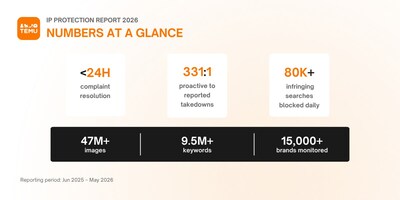
The annual report, which covers the period June 2025 through May 2026, details how Temu enforces its platform rules governing IP rights and the results it has achieved.
Key figures from the report:
Temu proactively screens for and takes down infringing listings using a combination of its proprietary screening technology and a team of human expert reviewers. Early detection reduces the enforcement burden on brands, particularly smaller businesses without dedicated IP teams.
"We work to protect intellectual property before it becomes a problem for a rights holder," said a Temu spokesperson. "The report reflects our priorities of finding and removing potentially infringing listings proactively, resolving reported ones quickly and working directly with brands so the system keeps improving."
Screening at every stage
Temu vets sellers before they can join and list on the platform. Over the past year, more than 40% of new applicants were rejected at onboarding for failing verification checks. Temu terminated more than 16,000 stores over the period for repeated IP violations.
Every listing is screened against a detection database of more than 47 million images and 9.5 million keywords before it goes live and continues to be monitored after listing.
Temu has also rolled out a consumer awareness feature across all operating markets. Searches for terms like "fake," "dupe" and "counterfeit" return no results and show a message about the risks of counterfeits instead. The feature blocks more than 80,000 such searches each day.
Working with brands and businesses
Through the Brand Guardian Initiative (BGI), launched in April 2024, brands work with Temu to embed their trademarks and other IP rights into the platform's monitoring systems, so infringements are caught sooner. The initiative works directly with more than 3,000 brands, including about 500 small and medium-sized enterprises. Participating brands get one-on-one support and regular enforcement data whether or not they sell on Temu. Temu also offers IP compliance courses through its Seller Education Center.
Deeper collaboration with the IP community
Over the past year, Temu engaged with more than 130 IP associations, nearly double the year before. In April 2026 it joined the International Anti-Counterfeiting Coalition, building on its role in the coalition's Marketplace Advisory Council. It also works with international and national IP groups including the International Trademark Association and France's Union des Fabricants.
"Strong intellectual property protection is essential for a healthy marketplace," the Temu spokesperson said. "Our work protects legitimate brand owners and helps consumers buy with confidence and builds trust in our marketplace. We will continue to invest in the people, tools and partnerships that make that protection stronger."
Read the full 2026 Intellectual Property Protection Report.
About Temu
Temu is a global e-commerce platform connecting consumers with millions of manufacturers, brands and business partners. Operating in more than 90 markets worldwide, Temu is committed to providing affordable, high-quality products that enable customers to live better lives.
Photo - https://mma.prnewswire.com/media/3004887/IP_report_banner_infographic.jpg
 View original content:https://www.prnewswire.co.uk/news-releases/temu-triples-brand-coverage-in-proactive-ip-enforcement-push-302823324.html

Die Schweizer Stimmberechtigten haben einer Verschärfung des Zivildienstgesetzes zugestimmt. Laut definitiven Ergebnissen votierten 52,5 Prozent für die Reform, rund 47,5 Prozent dagegen. Damit setzte sich der Kurs von Bundesrat und Parlament durch, den Zivildienst wieder klar als Ausnahme und nicht als gleichwertige Alternative zum obligatorischen Militärdienst zu definieren. Die Stimmbeteiligung lag mit rund 58 Prozent vergleichsweise hoch; 1'690'343 Personen legten ein Ja in die Urne, 1'531'878 stimmten Nein.
Das Ergebnis offenbart deutliche regionale Bruchlinien. Während viele deutschsprachige Kantone die Reform klar unterstützten – etwa Aargau mit 56,2 Prozent, St. Gallen mit 58,9 Prozent, Graubünden mit 59,3 Prozent und Luzern mit 56,9 Prozent Ja – fiel das Verdikt in der Romandie gespalten aus. Genf, Waadt, Neuenburg und Jura lehnten die Vorlage ab, mit Nein-Anteilen von bis zu gut 60 Prozent im Jura. Basel-Stadt stellte sich ebenfalls gegen die Verschärfung, und der Kanton Zürich kippte nach Auszählung der städtischen Stimmen knapp ins Nein-Lager. Demgegenüber sagten Wallis (57,1 Prozent), Freiburg (50,2 Prozent) und das Tessin (53,9 Prozent) Ja zur Reform.
Kern der Vorlage ist ein Paket von sechs Massnahmen, die den Wechsel aus der Armee in den Zivildienst deutlich unattraktiver machen sollen. Künftig müssen alle, die in den Zivildienst wechseln, mindestens 150 Diensttage leisten – unabhängig davon, wie viele Tage im Militär noch offen wären. Für Unteroffiziere und Offiziere gilt damit neu derselbe Umrechnungsfaktor von 1,5 Zivildiensttagen pro verbleibendem Militärdiensttag wie für einfache Soldaten. Wer alle Armee-Ausbildungstage bereits absolviert hat, kann künftig nicht mehr in den Zivildienst wechseln, um der Schiesspflicht zu entgehen.
Zusätzlich werden der zeitliche Rahmen und die Einsatzmöglichkeiten enger gezogen. Zivildienstleistende müssen ab dem Jahr nach ihrem ersten Einsatz jährlich Dienst leisten, bis alle vorgeschriebenen Tage erfüllt sind. Wer vor oder während der Rekrutenschule ein Gesuch stellt, muss den langen Anfangseinsatz von 180 Tagen bereits im Jahr nach der Zulassung absolvieren. Einsätze, die ein begonnenes Medizinstudium voraussetzen, werden gestrichen – offiziell, weil der Armee medizinisches Personal fehlt. Bürgerliche Parteien werteten das Ja als Bestätigung, dass der Zivildienst eine Ausnahme bleiben solle; die links-grüne Nein-Allianz verweist angesichts des knappen Resultats auf die breite gesellschaftliche Unterstützung für den Zivildienst und kündigt an, weitere Verschärfungen bekämpfen zu wollen.



