FDA Clearance and CE Mark Complete Aptiva's Antiphospholipid Syndrome Portfolio, Expanding Global Access to Comprehensive APS Testing
SAN DIEGO, Sept. 23, 2026 /PRNewswire/ -- Werfen today announced that its Aptiva Antiphospholipid Syndrome (APS) Immunoglobulin A (IgA) Reagent has received both U.S. Food and Drug Administration (FDA) 510(k) clearance and CE Mark under the European Union's In Vitro Diagnostic Medical Devices Regulation (IVDR). Together, these milestones complete the Aptiva APS testing portfolio, which now offers all three APS isotypes, IgA, IgG, and IgM, for both anti-cardiolipin (aCL) and anti-beta 2 glycoprotein 1 (aβ₂GP1) antibodies.
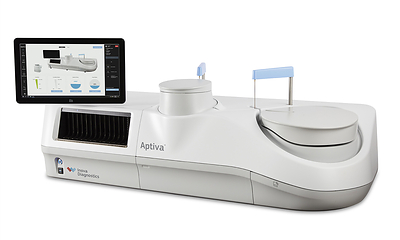
The achievement expands global access to comprehensive APS testing on Aptiva and further strengthens its growing portfolio of assays, which also includes testing for Celiac Disease and Connective Tissue Diseases (CTD). Together, these assays provide laboratories with a more comprehensive solution for autoimmune testing and patient evaluation.
The Aptiva APS IgA Reagent utilizes Aptiva's particle-based multi-analyte technology (PMAT) for the semi-quantitative determination of anti-cardiolipin (aCL) and anti-beta 2 glycoprotein 1 (aβ₂GP1) IgA antibodies in human serum. When used alongside the Aptiva APS IgG and IgM Reagents, and in conjunction with other laboratory and clinical findings, the IgA assay provides additional diagnostic information that may aid in the diagnosis of both primary and secondary APS.
Antiphospholipid syndrome is an autoimmune disease characterized by thrombotic events and pregnancy-related complications and can be difficult to diagnose because its clinical manifestations often overlap with other conditions. Having access to a complete APS antibody profile may provide clinicians with valuable diagnostic insight and support patient management decisions.
"Completing the APS isotype panel with the addition of IgA significantly enhances the clinical value of the Aptiva system," said Anthony Prestigiacomo, Vice President of Research and Development at Werfen. "APS can present with nonspecific or overlapping symptoms, making diagnosis challenging. By offering all three isotypes, clinicians and laboratories can obtain a more comprehensive assessment that supports informed clinical decision-making and improved patient care."
Aptiva is a fully automated, next-generation multi-analyte system designed to streamline autoimmune testing workflows. Powered by PMAT, the system processes multiple analytes simultaneously from a single patient sample, delivering high throughput with minimal hands-on time. Aptiva helps laboratories improve efficiency while providing comprehensive diagnostic information to clinicians.
"As the Aptiva menu continues to expand, with additional key biomarkers in development, we are building a platform that advances laboratory efficiency while delivering deeper clinical insight," said Vijay Namasivayam, PhD, Chief Operating Officer at Werfen. "The FDA clearance and CE Mark for APS IgA represent important milestones in our commitment to expanding access to innovative autoimmune diagnostics worldwide."
With the addition of APS IgA, the Aptiva portfolio now comprises a comprehensive menu of autoimmune markers across key disease states. This continued expansion underscores Werfen's commitment to delivering innovative, consolidated solutions that help laboratories achieve high-quality diagnostic results and support better patient outcomes.
About Werfen
Werfen (werfen.com) founded in 1966, is a worldwide developer, manufacturer and distributor of specialized diagnostic instruments, related reagents, automation workcells, and data management solutions for use primarily in hospitals and independent clinical laboratories. The Company's clinical areas of focus include Autoimmunity, Hemostasis, Acute Care Diagnostics, Transfusion, and Transplant.
Werfen's solutions help improve the way patients with autoimmune diseases are diagnosed, monitored, and treated. The autoimmunity portfolio includes Aptiva®, BIO-FLASH®, NOVA View®, and QUANTA-Lyser® 3000 systems, and QUANTA Link® data management solution.
The Werfen logo is a trademark of Werfen. Aptiva, QUANTA-Lyser, QUANTA Lite, QUANTA Link, QUANTA Flash, NOVA View, NOVA Lite are registered trademarks of Inova Diagnostics, Inc., a Werfen company. BIO-FLASH is a registered trademark of Biokit S.A. All other product names, company names, marks, logos, and symbols are trademarks of their respective owners.
 View original content to download multimedia:https://www.prnewswire.co.uk/news-releases/werfen-announces-us-fda-510k-clearance-and-ce-mark-for-aptiva-antiphospholipid-syndrome-iga-reagent-302886631.html

Eine anonyme E-Mail an die US-Botschaft in Bern hat kurz vor dem Auftritt von US-Präsident Donald Trump beim Weltwirtschaftsforum in Davos ein Ermittlungsverfahren der Schweizer Bundesanwaltschaft ausgelöst – und zur Festnahme einer WEF-Mitarbeiterin geführt. Inzwischen ist klar: Die gegen die IT-Expertin erhobenen Vorwürfe eines geplanten Attentats waren nicht zu belegen. Die Bundesanwaltschaft teilte mit, die in der Sache eröffneten Ermittlungen wegen strafbarer Vorbereitungshandlungen zu einem Mord seien eingestellt worden.
Die Warnmail war laut Medienberichten der Tamedia-Gruppe wenige Stunden vor Trumps Rede eingegangen. Der anonyme Absender schilderte in fehlerhaftem Englisch eine angeblich „dringliche Bedrohung“ für das Leben des US-Präsidenten in Davos und bezeichnete die später festgenommene Frau iranischer Herkunft als Agentin, die eine entsprechende Operation koordiniert habe. Die US-Botschaft leitete den Hinweis an die Schweizer Behörden weiter; diese erklärten, sie hätten die Warnung „sehr ernst“ genommen und seien „sofort aktiv“ geworden.
Tatsächlich arbeitete die Beschuldigte nicht am Tagungsort in Davos, sondern in der WEF-Zentrale im Genfer Vorort Cologny. Dort wurde sie nach Angaben der Bundesanwaltschaft festgenommen, mehrere Stunden lang bis tief in die Nacht vernommen und ihre Telefone sowie ihr Computer wurden beschlagnahmt und ausgewertet. Im Zuge dieser Maßnahmen habe sich jedoch gezeigt, dass sich keiner der in der anonymen E-Mail erhobenen Punkte erhärten ließ. Für alle Aspekte der Anschuldigungen seien keine Beweise gefunden worden, hieß es zur Begründung für die Einstellung des Verfahrens.
Die betroffene Mitarbeiterin, eine gebürtige Iranerin, war nach den Medienberichten kurz nach dem Vorfall beim WEF nicht mehr beschäftigt. Zu den Gründen äußerte sich die Organisation nicht; auf entsprechende Anfragen gab es zunächst keine Stellungnahme. Damit bleiben nach dem spektakulären Fehlalarm vorerst Fragen offen – etwa zur Herkunft und Glaubwürdigkeit des anonymen Hinweises –, während die Schweizer Strafverfolger den Fall strafrechtlich abgeschlossen haben.