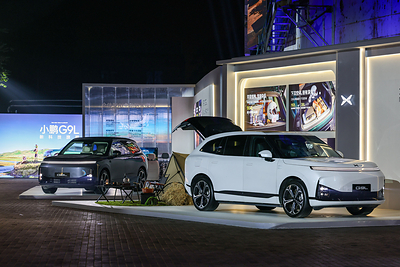
BEIJING, Sept. 17, 2026 /PRNewswire/ -- XPeng Inc. ("XPENG" or the "Company," NYSE: XPEV; HKEX: 9868), a leading global Physical AI company, today held its G9L China Launch Event in Beijing, China, and announced the G9L will be available in 64 global markets, with a global launch event scheduled on October 12 at Paris Motor Show.
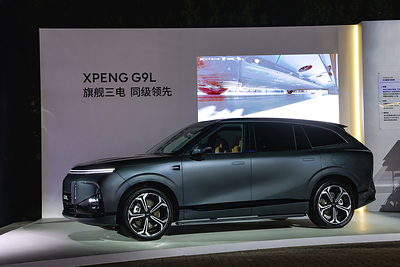
The G9L is XPENG's Next-Gen AI Flagship SUV, available in both BEV and REEV versions. With an overall length of 5,120 mm and a wheelbase of 3,100 mm, the G9L features a golden wheelbase-to-length ratio of 0.605, delivering better space and handling agility than its segment peers. As a premium model, it embodies XPENG's latest innovations in physical AI, spanning smart driving and the intelligent cockpit, and offering flagship-level features and global standards. Specifically, powered by XPENG VLA 2.0 model, the G9L enables fast cross-region generalization, delivering a smooth, safe, and steady performance to more global markets. Meanwhile, the G9L features the same Turing AI chip as XPENG's humanoid robot IRON.
"Global car" is a key product strategy for XPENG. Under the philosophy of "Global Standards, Global Manufacturing," this means the car must meet global safety and quality standards, its R&D needs to adapt to the requirements of different markets, and bring industry-leading technologies to users worldwide.
The G9L meets the design standards of four major five-star safety ratings worldwide. It has completed 192 crash tests across four major protocols — Euro NCAP, ANCAP, C-NCAP, and CIASI — totaling more than 110 individual test items. Over a three-year period, it has also undergone global road testing across 26 countries and regions, with cumulative mileage surpassing 6.74 million kilometers. Its electric powertrain, engineered to global vehicle standards, delivers stability that stands up to extreme environments worldwide.
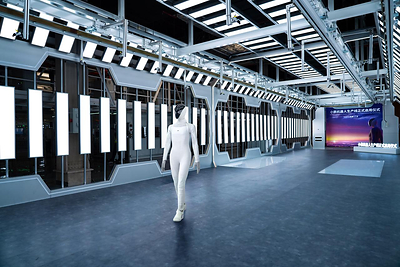
At the launch event, He Xiaopeng, Chairman & CEO of XPENG, also reviewed XPENG's latest progress in humanoid robot — the world's first automated production line for advanced general-purpose humanoid robots was officially commissioned, using "robots to produce robots". He said, "We believe in 'car as robot', over the past few years, we have built an in-house AI foundation based on our work in AI cars and humanoid robots, and it powers both." This also explains why the G9L is a tech flagship SUV: it runs on XPENG's industry-leading physical AI technology.
The G9L will begin production in both Guangzhou, China, and Graz, Austria. Following the G6, G9, and P7+, it becomes the fourth model to roll off the line at Magna's plant in Graz, Austria — sharing the same lines and the same factory as European luxury vehicles. Behind this is XPENG's deepening collaboration with Magna. After announcing a cooperation agreement in September 2025, XPENG leveraged Magna's mature production lines to assemble locally in Europe, launching four models within a single year.
At the end of the event, Mr. He also announced that the G9L Global Launch Event will be held on October 12 at the Paris Motor Show in France, where XPENG's booth is in Hall 6. The launch in France is merely the first stop, with the G9L to be introduced in 64 countries and regions.
If you are interested in XPENG's Paris Motor Show event, please contact:
pr@xiaopeng.com
XPENG Paris Motor Show Press Kit:
https://drive.google.com/drive/folders/1I8SLTqDREdDCzeY5YUu8LjLe7jlPI6e2
 View original content to download multimedia:https://www.prnewswire.co.uk/news-releases/xpeng-launches-its-next-gen-ai-flagship-suv-g9l-in-china-with-global-launch-set-for-oct-12-at-the-paris-motor-show-302882177.html

Während die Dieselpreise in Teilen Italiens neue Höchststände erreichen, zeichnet sich in Luxemburg eine spürbare Entspannung ab – und in Deutschland profitieren Autofahrer nur eingeschränkt von Steuererleichterungen. In Südtirol kletterte der Dieselhöchstpreis in Bozen Medienberichten zufolge auf 2,288 Euro pro Liter und lag damit am Mittwoch über dem Durchschnitt auf den italienischen Autobahnen. Dort wurden im Schnitt 2,287 Euro pro Liter Diesel fällig. Im gesamtstaatlichen Vergleich ist Südtirol damit weiterhin Spitzenreiter bei den Preisen.
Auch in anderen italienischen Regionen zogen die Dieselpreise deutlich an. In Trient stieg der Selbstbedienungspreis auf 2,274 Euro pro Liter, ein Anstieg um 1,1 Cent binnen eines Tages. Die stärksten Preissprünge wurden jedoch nicht in den teuersten Regionen verzeichnet, sondern im Nordosten und im Westen des Landes: In Friaul verteuerte sich ein einmaliges Volltanken von 50 Litern Diesel um 1,25 Euro, in Ligurien um 1,20 Euro, im Latium um 1,15 Euro. Auf den Autobahnen wurden Tagesanstiege von bis zu zwei Cent je Liter registriert. Der Präsident der nationalen Verbraucherunion, Massimiliano Dona, wirft der Regierung in Rom vor, zu wenig gegen die Preisanstiege zu unternehmen, und warnt vor möglichen Folgen für die Inflation.
Parallel dazu zeigt sich in Luxemburg ein gegenteiliger Trend. Dort wird Diesel nach Angaben des Wirtschaftsministeriums ab Mitternacht um 6,2 Cent je Liter günstiger und kostet dann 1,995 Euro. Damit fällt der Preis unter die Marke von zwei Euro. Die Benzinsorten Super 95 und Super 98 bleiben stabil bei 1,837 Euro beziehungsweise 2,049 Euro je Liter. Auch Heizöl wird in Luxemburg billiger: Bei Abnahme von mindestens 1.500 Litern sinkt der Literpreis am Mittwoch ebenfalls um 6,2 Cent auf 1,477 Euro. Der Großherzogtum bewegt sich damit preislich klar unter dem Niveau vieler Regionen in Italien.
In Deutschland wiederum kommt eine bereits beschlossene Steuerentlastung für Autofahrer nur begrenzt an. In Sachsen-Anhalt senkte die Bundesregierung vor rund einer Woche die Steuern auf Kraftstoffe um 17 Cent pro Liter. Laut dem Portal Benzinpreis-blitz kostete Super E10 am Mittwochnachmittag im Landesdurchschnitt 2,12 Euro pro Liter und damit lediglich rund sieben Cent weniger als am Nachmittag vor Inkrafttreten des Rabatts. Der Dieselpreis lag bei 2,19 Euro pro Liter, rund 15 Cent unter dem Vorkrisenniveau. Die Entlastung erreicht damit nicht vollständig die angekündigte Höhe, zudem spielt laut den Erhebungen die Uhrzeit eine wesentliche Rolle: Je nach Tageszeit fällt der Vorteil für Verbraucher unterschiedlich aus.
Im europäischen Vergleich entstehen damit deutliche Preisunterschiede für Dieselverbraucher. Während Italien mit Rekordständen in Teilen des Landes und spürbaren Tagesanstiegen im Fokus steht, nutzt Luxemburg den Spielraum für Preissenkungen. Deutschland versucht, über Steuersenkungen gegenzusteuern, bislang mit begrenzter Durchschlagskraft an der Zapfsäule. Für Verbraucher bleibt das Umfeld volatil – und die Frage, in welchem Umfang staatliche Eingriffe und Marktbewegungen künftig tatsächlich im Portemonnaie der Autofahrer ankommen.